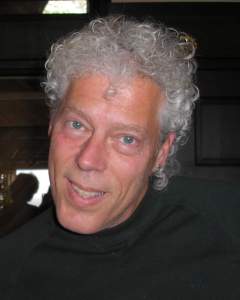
 Marc Maislen (Director) began on the East Coast performing original works, being male lead of The American Mime Theatre and an Artist-in-Residence at Massachusetts College of Art. He has designed sets for: A Midsummer Night’s Dream, Speed-the-Plow, Art, Red, Heisenberg and Othello and has designed lights for Pacific Dance Ensemble, Lady Rizo and various productions. He is a published author of The Tale of Jinny Coreen and Shattered: Recovering from a Traumatic Injury, and he has two radio shows on KYAQ, New Realities and Coastal Currents. His main body of work has been directing A Midsummer Night’s Dream, Still Life, True West, Educating Rita, The Boy Who Talked to Whales, Quintessence, The Seafarer, Art, Anton in Show Business, Venus in Fur, Heisenberg, Red, Tiny Beautiful Things, Othello, Of Mice and Men and The Tempest.

Kathleen Dugan Barton (Asst. Director) worked as a classical ballerina with the San Francisco Ballet, San Francisco Dance Theater, Santa Clara Ballet, and San Jose Dance Theater. She owned and operated Dugan’s Dance Academy and the children’s theater company called Youth in Performance. She went on to receive her teaching degree with a Masters in Administration. She is now assisting New Visions Arts theater company and is a working abstract artist.
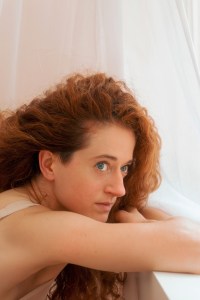 Livanna Marissa Maislen (Leah) is an immersive dance-theatre performer (Sleep No More; Emursive Productions; Company SBB; Francesca Harper Project, Collective Attention SF, 13th Floor Theater) and yoga-movement instructor with roots in New York and the Northwest. She was Dancer and Rehearsal Assistant for Nick Cave’s Bessie-Award Winning show “The Let Go”, Nona Hendryx & Carrie Mae Weem’s “Refrigerated Dreams” and Austria’s Bregenzer Fruehling’s Tanzfestival. Maislen has performed internationally and has worked with Nicole von Arx, Yin Yue, Karole Armitage, the San Francisco Opera, the Seattle Opera. She is currently a performer with Liss Fain Dance and holds a Master’s Degree in Somatic Psychotherapy at CIIS.
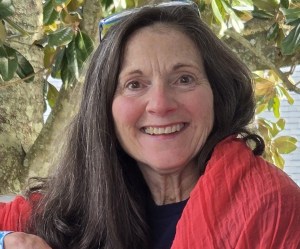 Flo Resant (she/her/Vera) came in on the last big storm from the North. The lightning strike gave her the anthropomorphic essence of grandmother. Gray hair and all! She came to poke your soft spots and tuck you in with a little nagging guilt. She notoriously reminds you of your most embarrassing moments and is the reigning queen of back-handed compliments. The role of Vera has given Flo new light and meaning for all things “whadayacallit.” We hope you enjoy Gramma Vera’s proverbial pinch on the cheek ; )
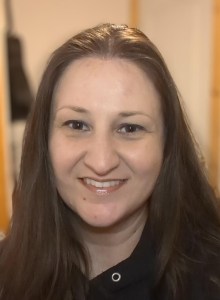 Mandy Richman-Carter (Bec) is proud to return to the stage as Bec after a few year break to do behind the scenes work for several productions. “This character is the one that has closest resembled me in my 40 year theatre career…she immediately leapt off the page to me as neurodivergent, in the most authentic way.” Other stage credits include The Blue Bad Idea Bear in Avenue Q, Bianca in The Taming of the Shrew, and the Mom in She Loves Me, She Loves Me Not. She is a certified autism support coach, substitute teacher and owner of The Friend Zone Autism Support. She wishes to thank the talented cast and crew for bringing this show to life and her awesome son, Orion, for letting mommy share her time and energy with others.
 Meghan Cahill (Amanda) comes from Idaho, where she performed on a moving train, a hot air balloon, and a cattle ranch. This is her second time working with New Visions Arts, after The Tempest in 2024.
CJ McCarty (Stage Manager/Lily) has been a part of Newport’s theater community since 1998 working with all 4 of the theater companies that our Performing Arts Center boasts. She has joined musical, drama, and comedic productions as an actor, singer, and more recently as a stage manager, and is grateful for all of the amazing and rewarding experience.
Aleina L. Turner (Lighting Designer, is delighted to have helped this show come to life! She’s grateful to have worked with NVA and excited for opportunities to do so again in the future. Her credits include a variety of concerts and performances at Newport Performing Arts Center, as well as Southern Utah’s Hafen Theater, St. George’s PAC, St. George Musical Theatre, The Electric Theatre, and many others!
Nikki Paige (Costumer/Dresser) ages fish by day and acts, knits and writes in her free time. She’s costumed Sex Please We’re 60 and The Violet Hour, assisted costuming The Tempest and multiple other productions, makes her own custom dresses for roles she plays, and loans out her closet full of renaissance gear to any show she’s in that needs it. She’s been acting in Newport for over 20 years and also performs in a number of audio dramas. Her acting information can be found at https://nikkipaige.carrd.co/
Jay Watkins (Light/Sound Tech) is Oregon born, and married into the theater. He loves reading and animals. He’s done tech for such shows as What The Constitution Means To Me, and Avenue Q. He loves this community, and is proud to work with the dedicated and talented individuals he has met at the Performing Art Center.
Geoff Levear (Set Engineer) has been designing and building sets for over twelve years both here in Newport and in Portland, Or and Mesa, Az. He enjoys the creative and collaborative process and prefers to be a backstage person.
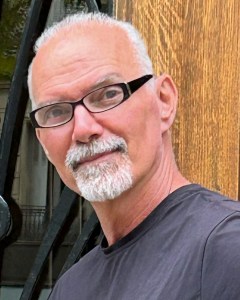 Pete Theodore (Media Designer) is a retired graphic artist who has lent his experience in media design to performing arts organizations for 15 years. 4000 Miles marks his sixth such collaboration with New Visions Arts, preceded by What the Constitution Means to Me, The Tempest, Of Mice and Men, Sex Drugs Rock & Roll, and Heisenberg. You may have seen him on stage in some of these productions as well, appearing as Prospero in The Tempest, Slim in Of Mice and Men, and as Irish baker Alex Proust in Heisenberg. Other notable roles acting as both media designer and stage performer include The Producers, (as Roger Debris), Young Frankenstein (as The Creature), The Fantasticks (as El Gallo), Addams Family (as Lurch), and Man of La Mancha (as Don Quixote).
Kateri Eastman (they/them/Assistant) is a chaotic good tinker witch who grew up in the basement of the Naterlin where the stage lights were made out of old tin cans and spit. They absorbed theater through osmosis and brought a goblinesque approach to any creative endeavor (i.e., fixing problems with whatever they’ve got in their pockets).
 NEW VISIONS ARTS